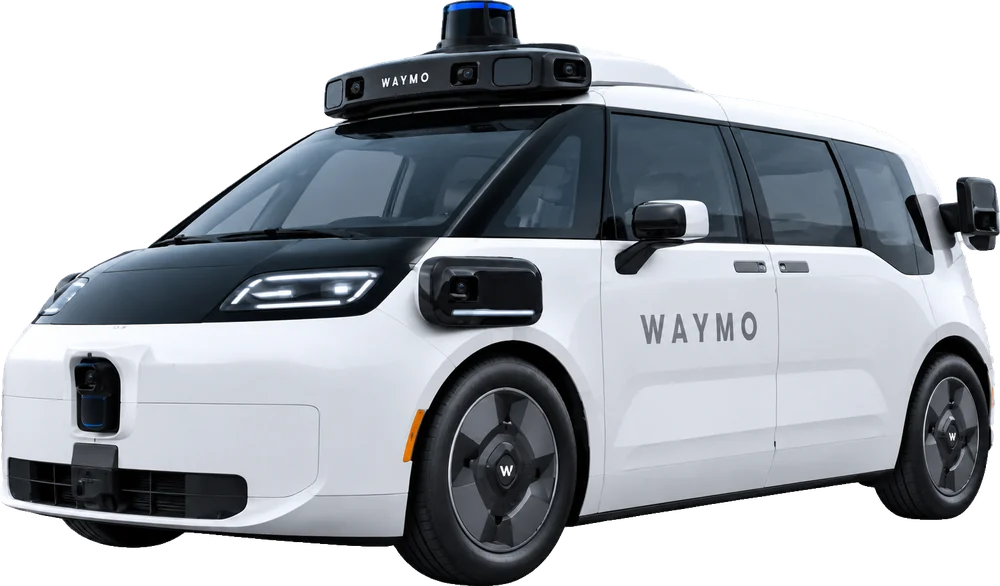
Waymo's sixth-generation robotaxi: a boxy electric van built by Zeekr, carrying up to four riders and seeing the road with cameras, lidar and radar together.
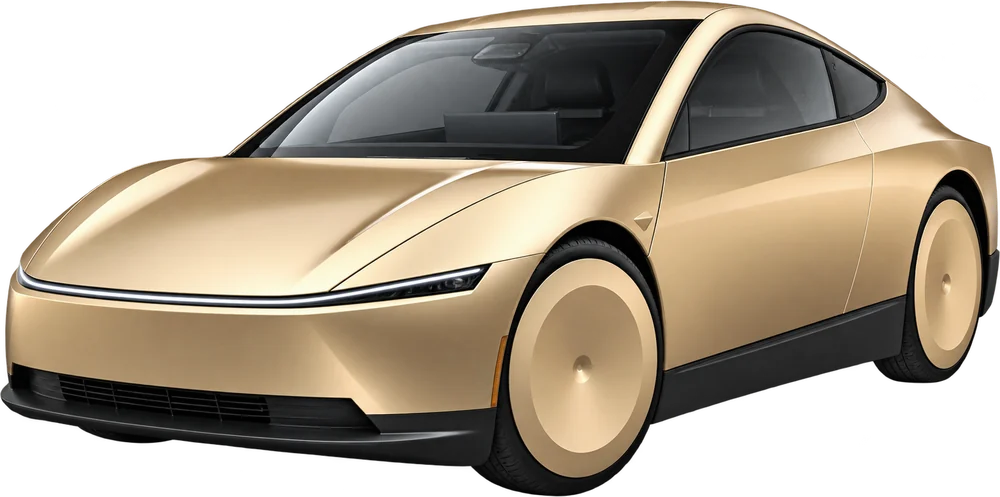
Tesla's two-seat robotaxi with no steering wheel or pedals. It sees the road with cameras alone, betting that software can do what other companies use lidar and radar for.
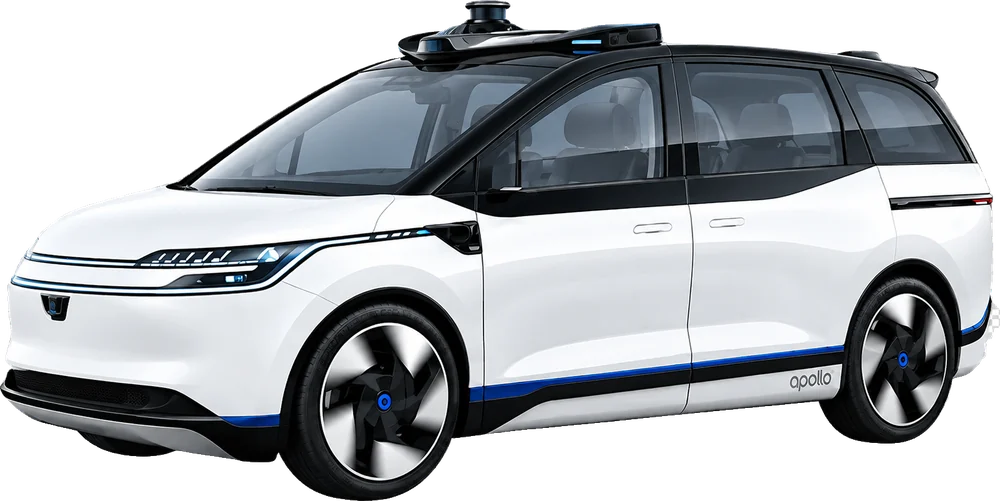
Baidu's sixth-generation robotaxi, built for its Apollo Go service: 38 sensors including eight lidars, and a steering wheel that can be removed altogether.
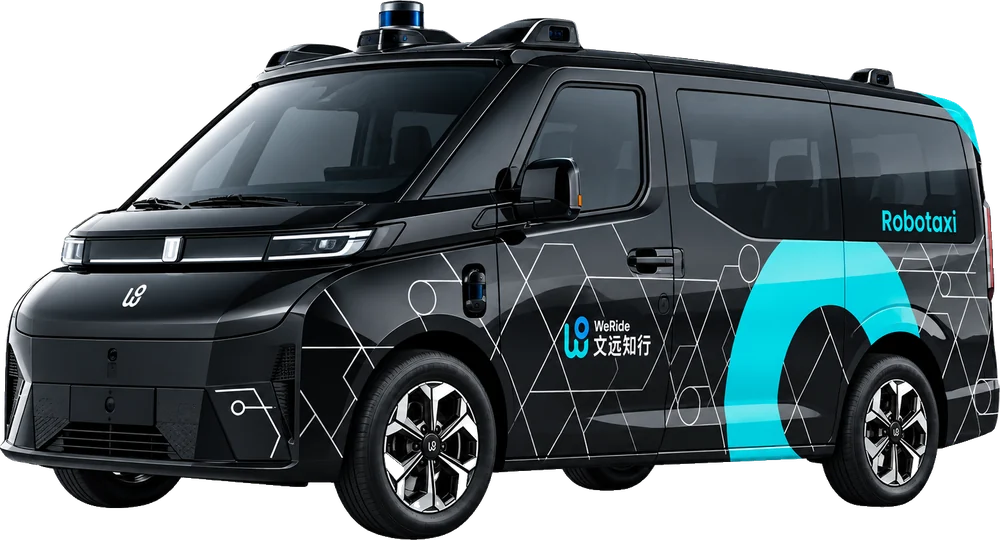
WeRide's purpose-built robotaxi van, built with Geely Farizon: no front passenger seat, an extra-wide door opening, and a new long-range lidar in its upgraded version.
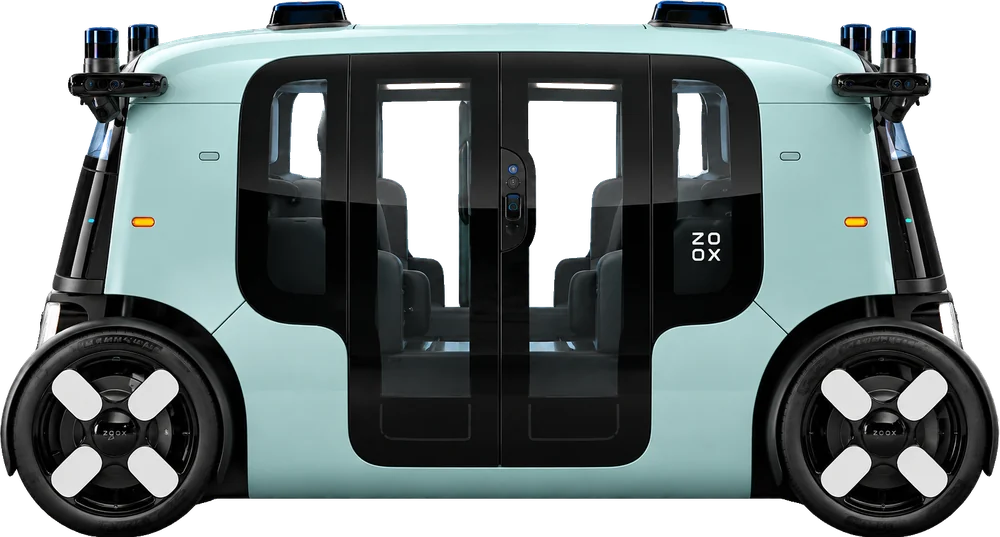
Amazon-owned Zoox's carriage-style robotaxi: four seats facing each other, no front or back, and no steering wheel, built from scratch to never be driven by a person.
Driverless miles and cities describe each company's whole service, not just the vehicle shown, and change often; each is dated.
For passengers
Why a robotaxi trip can take longer
Nobody yet measures robotaxi trip times in a fair, comparable way. They depend on the city, the traffic and the route far more than on the car, so we don't list them as a spec. What we do know points to three reasons a robotaxi can be slower than a human driver.
Highways. Taking the highway is often the quickest route, but most robotaxi services still avoid it. As of October 2026, Waymo is the only one confirmed to carry riders on highways with no one at the wheel, in Phoenix and on some Austin trips, and even it paused highway rides between May and July 2026. Tesla has tested highways with a safety driver, but hasn't been reported using them in its driverless rides.
Waiting. A study of over 94,000 simulated ride requests in the San Francisco Bay Area (late 2025) found average waits of about 3 minutes for Uber, 5 for Lyft, 6 for Waymo and 15 for Tesla, whose Bay Area cars have safety drivers. A smaller fleet usually means a longer wait.
Driving style and routes. In a small Los Angeles test of 50 rides in 2024, before Waymo was allowed on freeways there, its trips took about twice as long as Uber or Lyft.
Figures as of October 2026. The ride tests are small or limited to one area, so treat them as a guide, not a ranking.