Tesla · USA
Cybercab
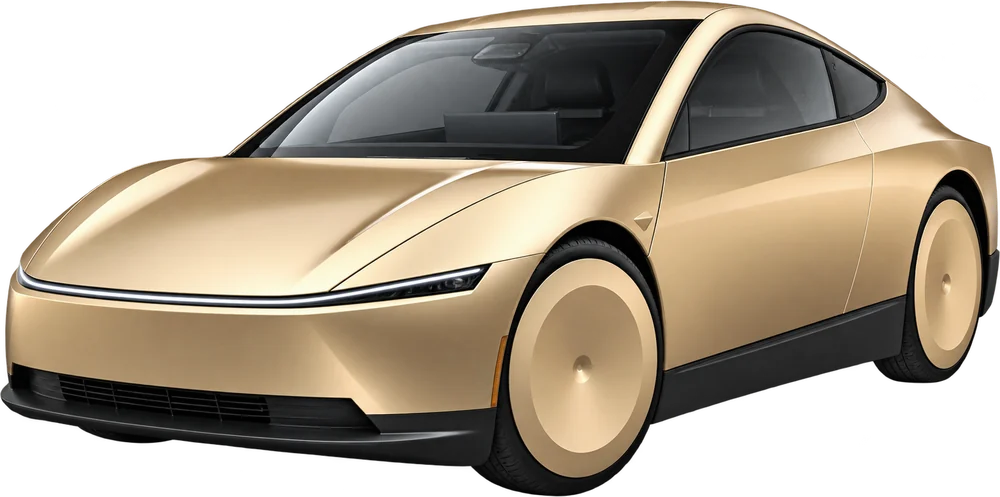
Tesla's two-seat robotaxi with no steering wheel or pedals. It sees the road with cameras alone, betting that software can do what other companies use lidar and radar for.
Cybercabs joined Tesla's public robotaxi fleet in part of Austin in September 2026, mixed in with Model Ys. Riders can't request one specifically.
How it works
5 ideas that make Cybercab different
Cameras only
Tesla gives the Cybercab eight outward cameras and no lidar or radar for driving. Its argument: people drive with eyes alone, so good enough software should too. It keeps the car cheap, but leaves it with no backup sense in glare, fog or darkness.
Learning from a fleet
The same camera-based software runs in Tesla's customer cars, which collect real-world driving clips that Tesla uses to train it.
No wheel, no pedals
There is no way for a person to drive it: steering and braking are controlled electronically. US regulators are currently examining how Tesla certified it for public roads.
Small and efficient
With two seats, two doors and a 47.6 kWh battery, it is smaller and lighter than a family car, built for one or two riders at a time.
Supervision is being removed in steps
Tesla's robotaxi service has run with safety monitors on board, removing them city by city and car by car. Tesla doesn't say what share of its rides now have no monitor.
Watch it drive
Cybercab | The Future is Autonomous — Tesla (official). Tesla's introduction to the Cybercab, released after its October 2024 unveiling.
Full specifications
Compare with other RobotaxisFigures are the maker's own unless marked as a third-party figure. Nothing below has been independently verified.
Identity
Service
What this means
Miles driven with no human ready to take over, across the company's whole fleet. Most were driven by older vehicles, so this measures each company's experience rather than the car shown. Companies count differently, so check the note under each figure.
Cabin
What this means
A car built without a steering wheel or pedals can never be driven by a person, so it has to be fully self-driving everywhere it goes. Removing them frees up space, but in most countries it also needs special approval from regulators.
Sensing
What this means
Cameras see colour, text and signals, like traffic lights and road markings, and are cheap. On their own they have to estimate distance from the image, and they struggle in glare and darkness.
What this means
Lidar fires laser pulses and times their return, measuring the exact distance to everything around the car in 3D, day or night. It adds cost, which is why Tesla leaves it out and relies on cameras alone.
What this means
Radar uses radio waves to measure distance and speed. It sees through rain, fog and spray where cameras and lidar struggle, but in less detail.
Power and performance
Safety
Sources
Last checked 2026-10-23.